By Justine Framularo, MA, LMHC, HMIP | Heartfelt Healing Institute, LLC
You’ve probably heard the word “biofeedback” before. Maybe your doctor mentioned it. Maybe you came across it while searching for help with anxiety, chronic pain, or trauma. And maybe you thought: that sounds complicated.
It’s not. In fact, biofeedback is one of the most intuitive forms of healing there is — because it’s built on something your body is already doing.
Your Body Is Always Talking
Right now, as you read this, your heart is beating at a particular rhythm. Your breathing has a pace. Your muscles are holding a certain amount of tension. Most of the time, these processes run on autopilot — managed by your autonomic nervous system without any conscious input from you.
But here’s the thing: when you’ve been living with chronic stress, trauma, or persistent pain, that autopilot system can get stuck. Your nervous system starts running in survival mode — heart rate elevated, muscles tight, breathing shallow — even when there’s no immediate threat. Over time, your body forgets what “regulated” feels like.
Biofeedback gives you a way to see what’s happening inside your body in real time, so you can learn to change it.
How It Actually Works
During a biofeedback session, small, painless sensors are placed on your skin. These sensors measure things like your heart rate, heart rate variability (HRV), breathing patterns, muscle tension, and skin temperature. That information is displayed on a screen in front of you — as graphs, animations, or simple visual cues — so you can watch your body’s responses as they happen.
Then, with guidance, you practice shifting those responses. You might slow your breathing to a specific rhythm. You might focus on relaxing a muscle group you didn’t
realize you were clenching. You might use a visualization or grounding technique while watching your heart rhythm smooth out on the screen.
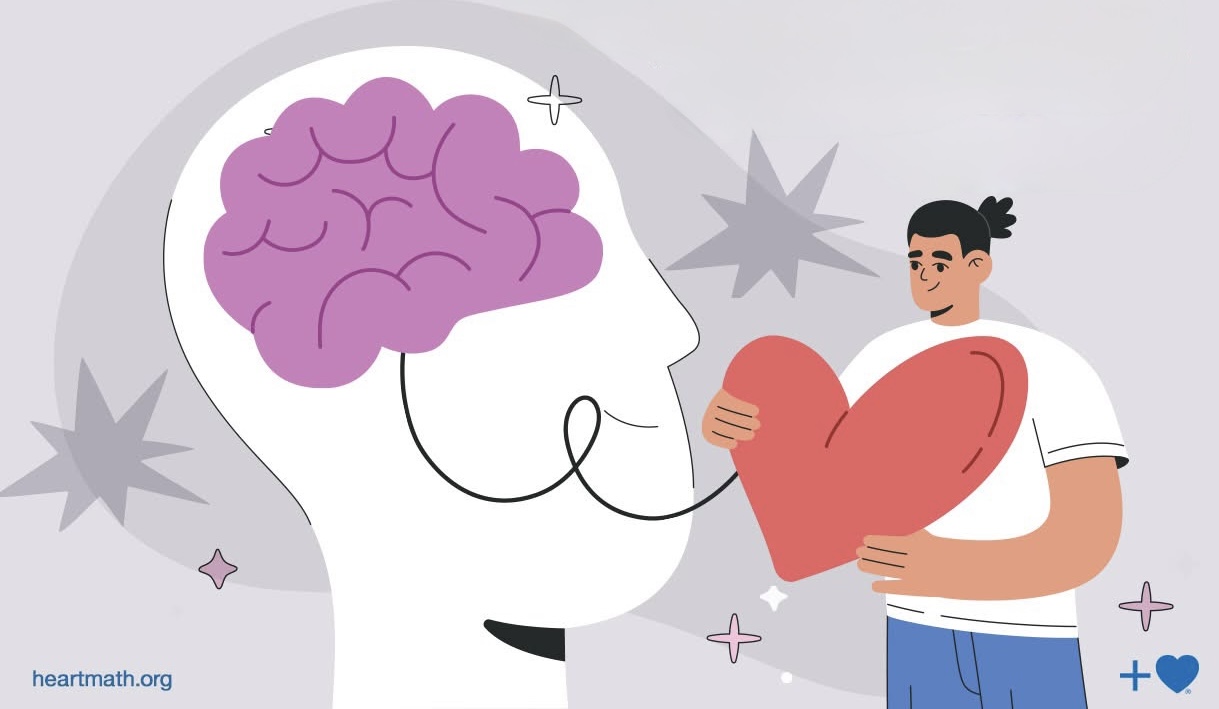
The key is the feedback loop: you try something, you see the result, and your brain learns. Over time, your nervous system begins to recalibrate — not because someone told it to, but because you trained it to.
Why Heart Rate Variability Matters
One of the most powerful measures we work with is heart rate variability, or HRV. This isn’t just how fast your heart beats — it’s the variation in time between each heartbeat. A healthy nervous system produces more variability, meaning your heart speeds up and slows down fluidly in response to your environment. That flexibility is a sign of resilience.
When someone has been living with chronic stress, trauma, or pain, HRV tends to decrease. The nervous system becomes rigid — locked into a stress response with less capacity to adapt and recover.
Research consistently shows that HRV biofeedback — where you practice breathing at your body’s natural resonance frequency, typically around six breaths per minute — can strengthen the connection between your heart, lungs, and brain. A systematic review of 29 studies found that HRV biofeedback produced significant improvements across a wide range of conditions, including anxiety, depression, sleep disturbances, and pain, with no adverse effects reported. Those clinical improvements occurred alongside measurable increases in heart rate variability, suggesting that the intervention directly supports healthier autonomic function.
In other words: when your nervous system gets more flexible, your symptoms often follow.
What Conditions Can Biofeedback Help With?
Biofeedback has strong research support for a range of conditions, including:
- Anxiety and panic disorders — by teaching your nervous system to shift out of fight-or-flight
- Chronic pain — including migraines, tension headaches, and low back pain
- Trauma and PTSD — by restoring the body’s capacity for self-regulation
- Depression — particularly when traditional approaches haven’t been enough
- Insomnia — by calming the physiological arousal that keeps you awake
- Stress-related health issues — like high blood pressure and digestive problems
It’s also increasingly used alongside psychotherapy, not as a replacement for talk therapy but as a powerful complement to it. When someone is stuck in a dysregulated state, sometimes the body needs to shift before the mind can follow.
What a Session Looks Like at Heartfelt Healing Institute
If you’ve never experienced biofeedback, here’s what to expect. You’ll sit comfortably while I place small sensors — usually on your fingertips or earlobes. There are no needles, no shocks, nothing invasive. You’ll see your physiological data displayed on a screen, and together we’ll explore what your body is doing and practice techniques to shift it.
Most clients notice something meaningful in the very first session — often a sense of calm they haven’t felt in a long time. That’s not magic. That’s your nervous system remembering what regulation feels like.
Over a series of sessions, those shifts become more natural. The goal isn’t to be hooked up to a machine forever — it’s to internalize the skills so you can access them on your own, anytime you need them.
You Already Have What You Need
Biofeedback doesn’t add anything foreign to your body. It simply reveals what’s already happening and gives you the tools to work with it. Your nervous system learned to protect you by staying on high alert. Biofeedback helps it learn that it’s safe to come back down.
If you’re curious about whether biofeedback might be right for you — whether you’re navigating anxiety, chronic pain, trauma, or just a nervous system that feels stuck — I’d love to talk.
Justine Framularo, MA, LMHC, HMIP Heartfelt Healing Institute, LLC 215 Toll Gate Road, Suite 309 #13 | Warwick, RI 02886 (401) 584-2837 | heartfelthealing.us
References
Fournié, C., Chouchou, F., Dalleau, G., Caderby, T., Cabrera, Q., & Verkindt, C. (2021).
Heart rate variability biofeedback in chronic disease management: A systematic review.
Complementary Therapies in Medicine, 60, 102750.
Lalanza, J. F., Lorente, S., Bullich, R., García, C., Losilla, J. M., & Capdevila, L. (2023). Methods for Heart Rate Variability Biofeedback (HRVB): A Systematic Review and Guidelines. Applied Psychophysiology and Biofeedback, 48(3), 275–297.
Lehrer, P. M., & Gevirtz, R. (2014). Heart rate variability biofeedback: How and why does it work? Frontiers in Psychology, 5, 756.
Pizzoli, S. F. M., Marzorati, C., Gatti, D., Monzani, D., Mazzocco, K., & Pravettoni, G. (2021). A meta-analysis on heart rate variability biofeedback and depressive symptoms. Scientific Reports, 11, 6650.